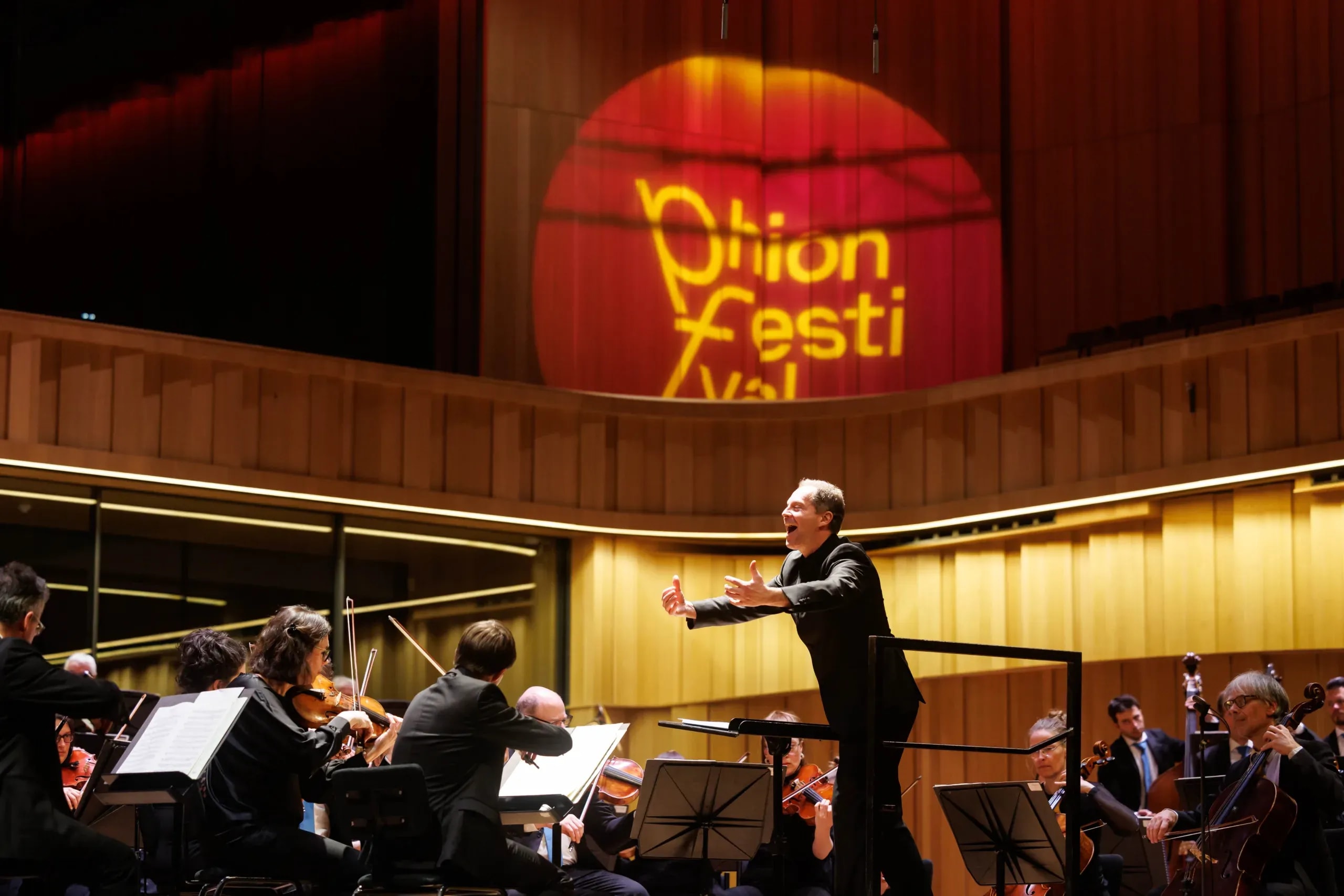
Orkest Phion

+14% increase in ticket sales after AI improvements
We worked closely with Phion Orkest to redesign and rebuild their website with a focus on usability, flexibility, and ticket conversion. We worked on their overall strategy, their UX design and research, Web Design and Web development, paying close attention on information architecture for the ultimate AI optimisation. As a cultural organisation with a diverse audience, they needed a platform that clearly presents their programme while guiding users smoothly toward purchasing tickets.
In the first 6 months after launch, we saw a +14% increase in ticket sales alone!
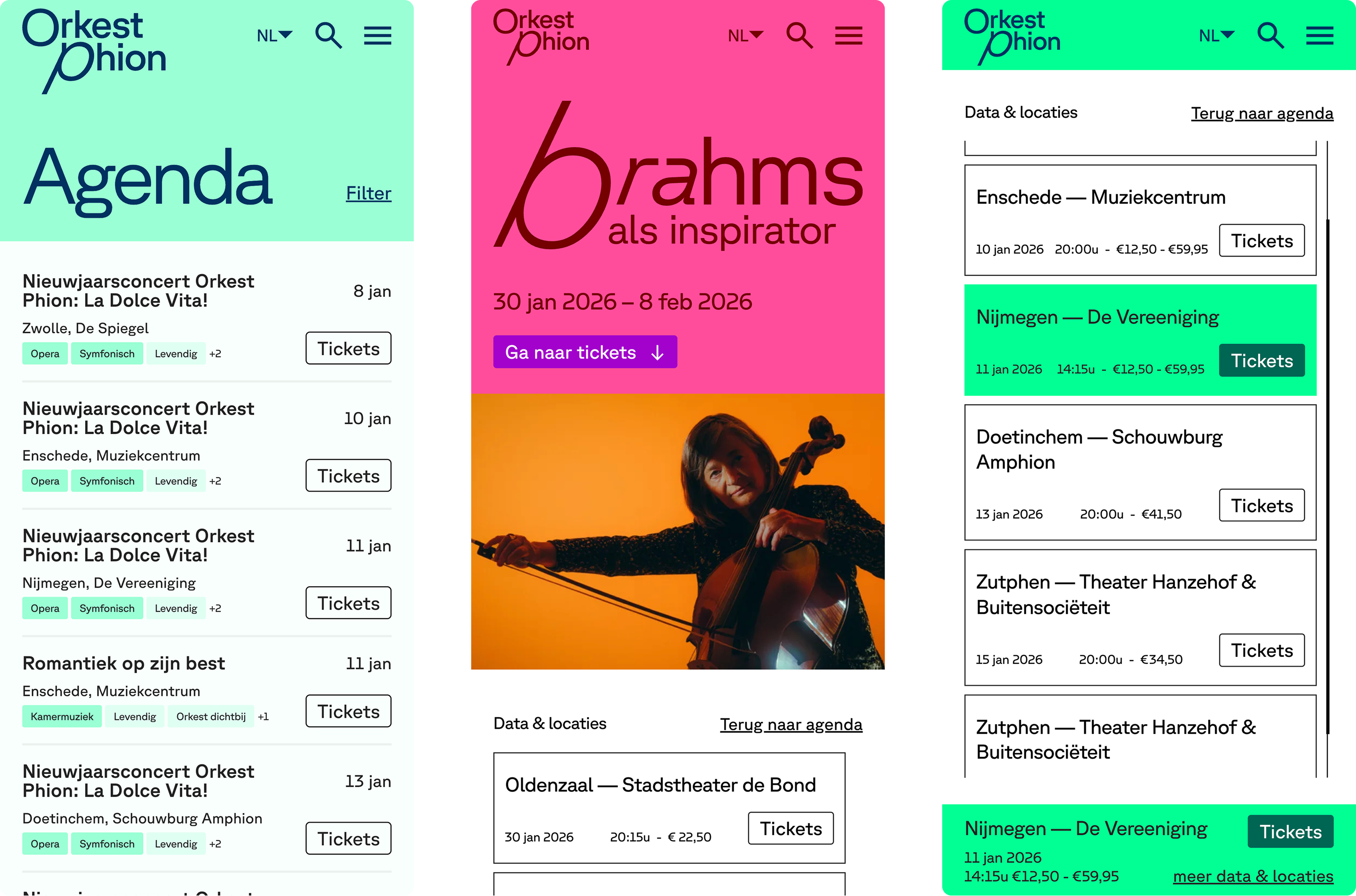
How we rebuilt Phion for AI consumption
The core idea is simple: users increasingly get answers directly from AI tools rather than clicking through to websites. AI optimisation is about making sure your content is the one these tools pull from, summarise, and cite — and for a cultural organisation like Orkest Phion, that visibility directly translates to ticket sales, audience growth, and long-term relevance.
AI engines are trained to surface the most trustworthy, clearly-stated, factually-grounded answer to a question. It's our job to make their task easier. Here's how we did it for Orkest Phion:
- Content — We reworked Orkest Phion's content to perform as well as possible in AI-driven search, adopting a Question and Answer format where appropriate, with direct answers leading. Headings were restructured as questions, and key terms and entities — programme details, conductors, venue information — were defined clearly through concise summary blocks.
- Data mapping & structure — We leveraged schema markup so AI engines can efficiently interpret Orkest Phion's data, covering:
- Organisation and ensemble information
- Event and performance pages
- Venue details and ticketing pathways
- Press coverage and linked reviews
- Technical hygiene — Beyond ensuring the site was performant, we paid close attention to:
- Fast page loads across all devices
- Mobile-first layouts suited to on-the-go concert-goers
- Clean URL structures that reflect programme and season hierarchies
The results spoke for themselves. By restructuring Orkest Phion's content into a natural Q&A style, backing it with clear proof of credibility, and marking it up with structured data, we saw a tangible increase in users reaching the site directly through AI-referred traffic.
Deep dive into UX Workshops
The project started with collaborative UX workshops where we aligned on brand values, audience needs, and organisational goals. It's probably the team's favourite part of every project — the moment we get to dive deep and really get to know our clients beyond the brief! Phion came to our office in Arnhem and over the course of the day, through games, challenges, and open discussions, we began to understand the project on a much deeper level. We explored how audiences currently discover and engage with Phion's programme, what barriers exist between curiosity and ticket purchase, and what the organisation truly wants its digital presence to say about it. These conversations surfaced assumptions, uncovered priorities that hadn't made it into the brief, and — just as importantly — helped build the kind of trust that makes the rest of a project run smoothly.
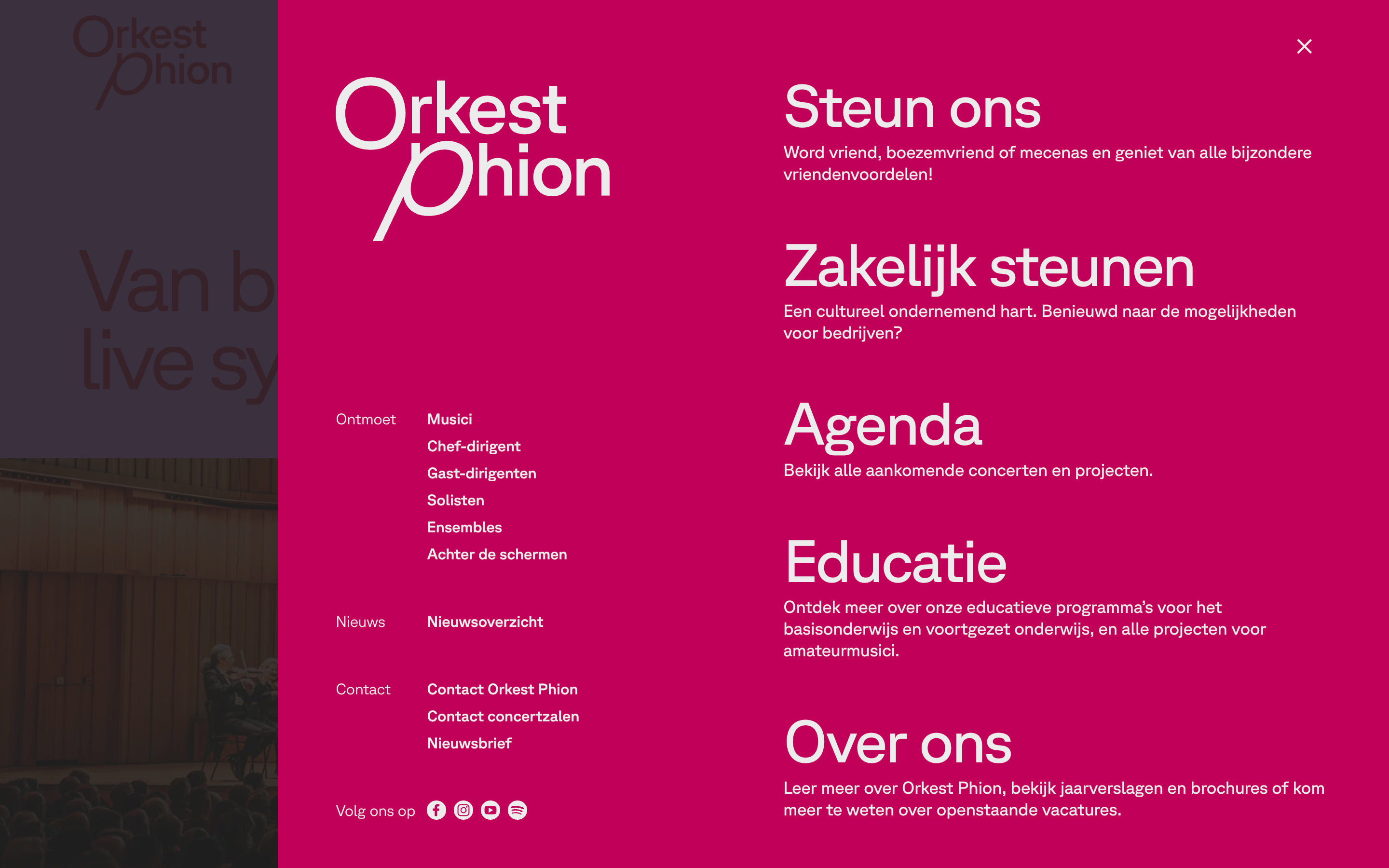
These sessions helped us identify clear friction points in the existing experience: navigation that didn't reflect how audiences actually think about concerts, event detail pages that buried key information, and a structure that made it harder than it needed to be to go from discovery to booking. With those insights in hand, we defined a clearer, more intuitive structure for the new website — one built around the way visitors actually move through the content.
From this, we developed a streamlined information architecture that improves discoverability at every level. Whether someone arrives knowing exactly what they're looking for or is simply browsing the upcoming season, the new structure makes it easier to explore concerts, find event details, and take the next step with confidence.
Mobile first
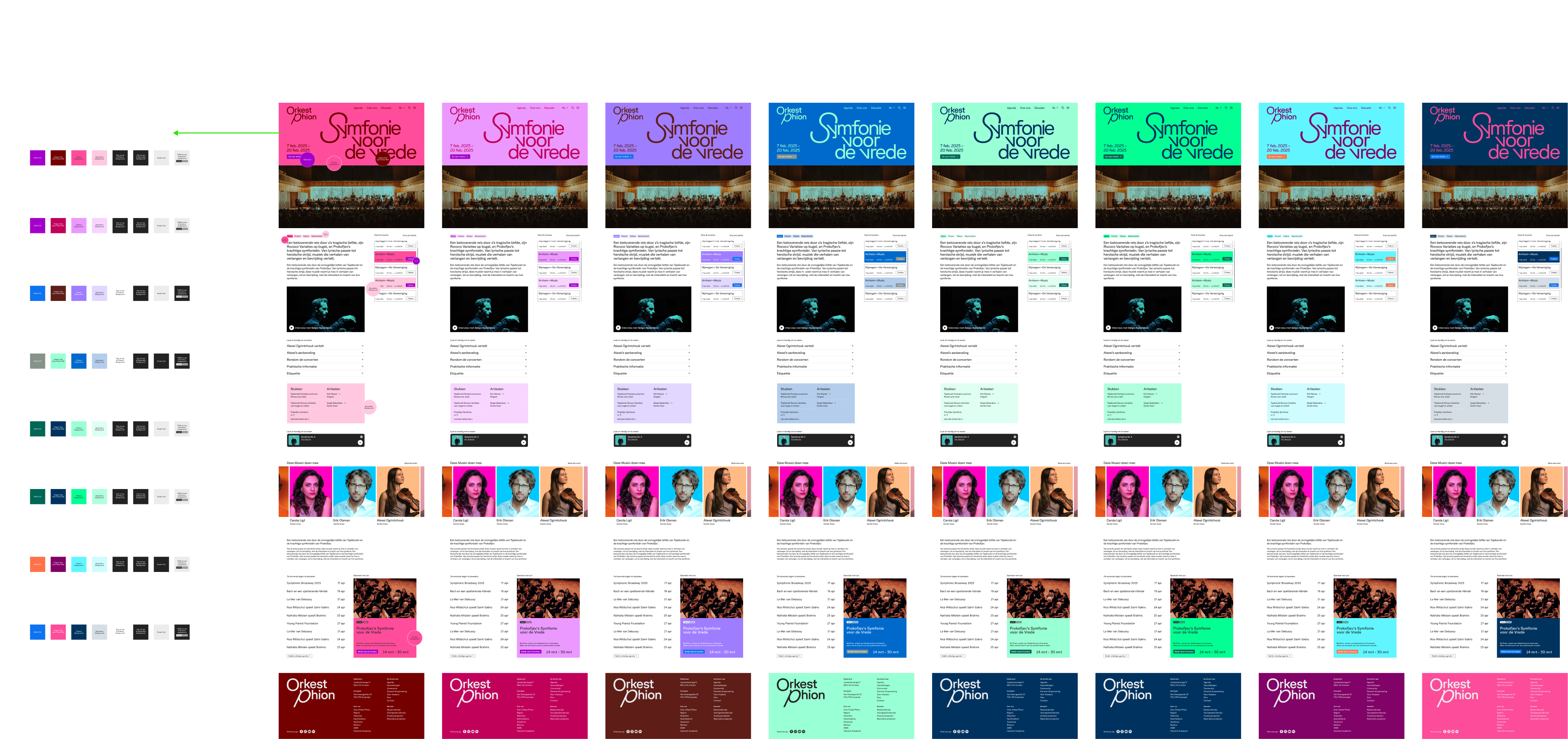
With mobile traffic making up more than half of all users, we prioritised a responsive experience that feels natural on smaller screens. Content, imagery, and video were designed to adapt fluidly across devices, while UX decisions focused on clarity, hierarchy, and effortless navigation. This ensures users can move from discovery to ticket purchase without friction.
To support long term flexibility, we created a modular component system that allows the Phion team to build and manage pages independently. This gives them control over editorial content, campaigns, and programme updates while maintaining consistency across the entire site.
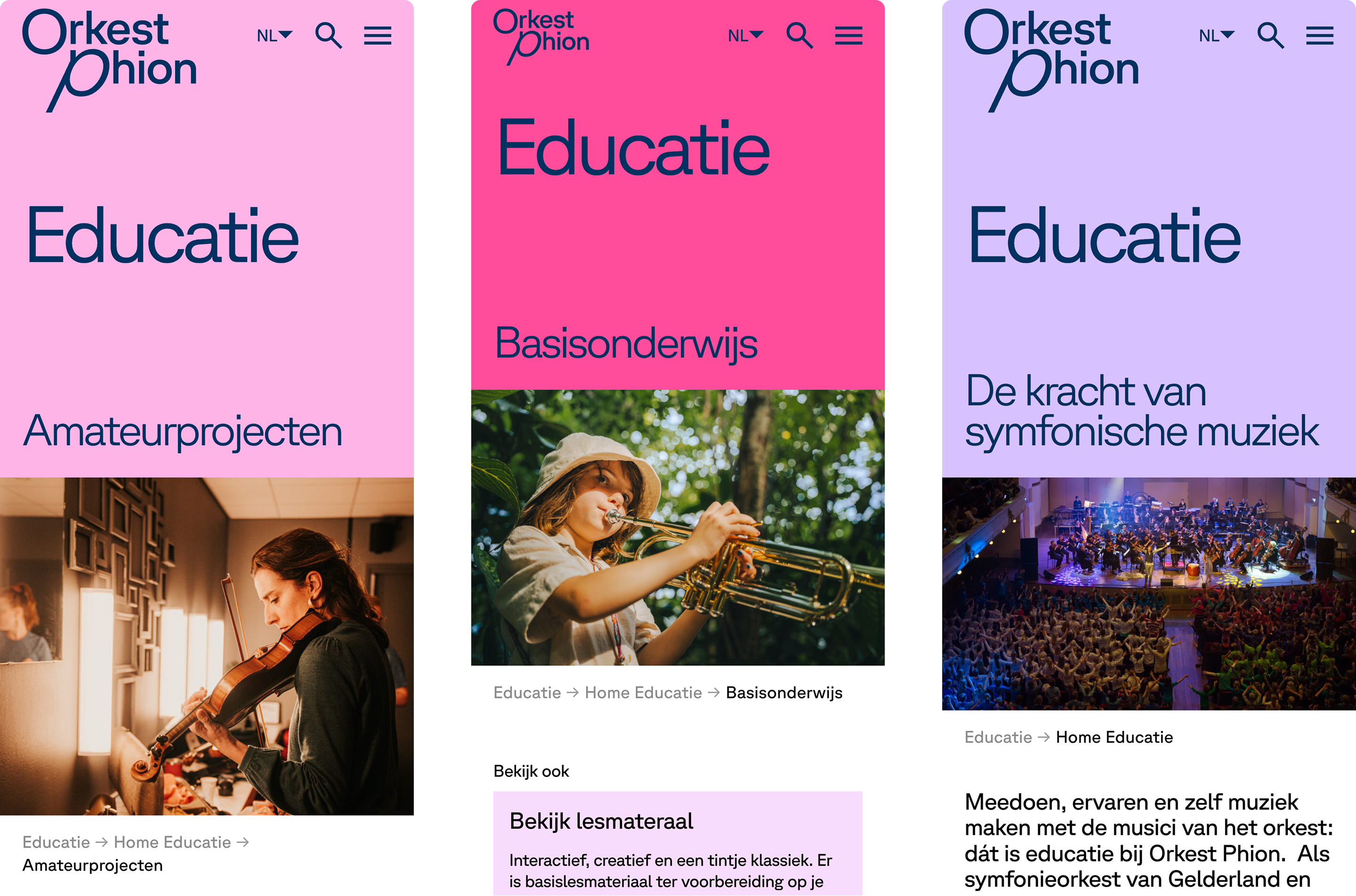
The build
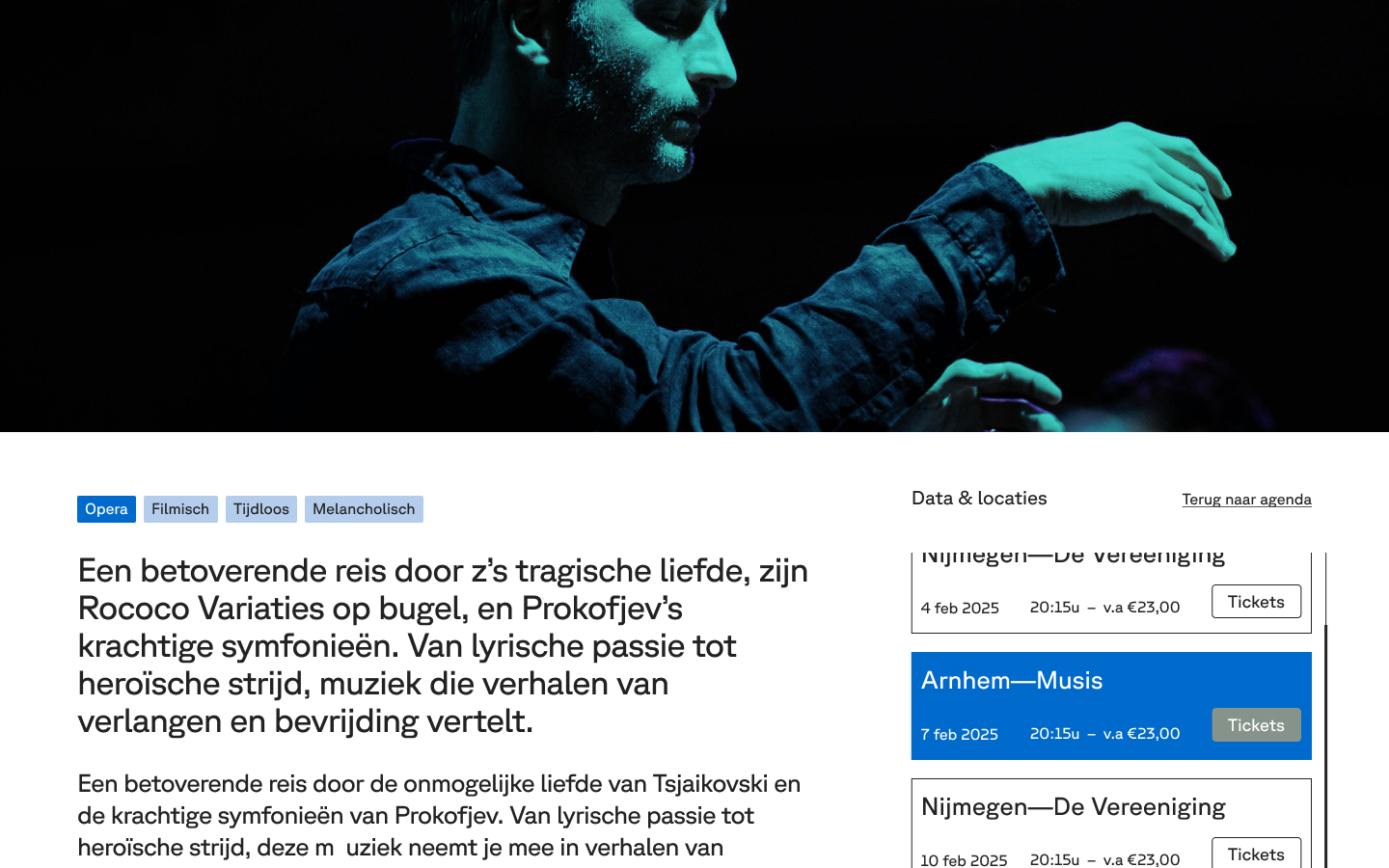
One of the key goals for Orkest Phion was to create a website that makes it easy for visitors to discover concerts and move seamlessly toward purchasing tickets. The existing digital experience did not sufficiently guide users through the programme or support clear conversion paths. On the technical side, the platform was developed with performance, accessibility, and scalability in mind (and AI as mentioned previously!). Special attention was given to integrating programme data and ticketing flows, making conversion paths clear and direct.
The result is a structured, scalable website that balances storytelling with functionality, supports internal management, and improves the overall journey from browsing to booking.
We restructure a client's website at the content and architecture layer — the specific signals AI engines use to decide what to cite — so that when their buyers ask ChatGPT/Perplexity/Claude who to work with, our client is the answer.
We worked closely with Phion Orkest to redesign and rebuild their website with a clear focus on usability, flexibility, and conversion.

